Skip to product information
1 of 6

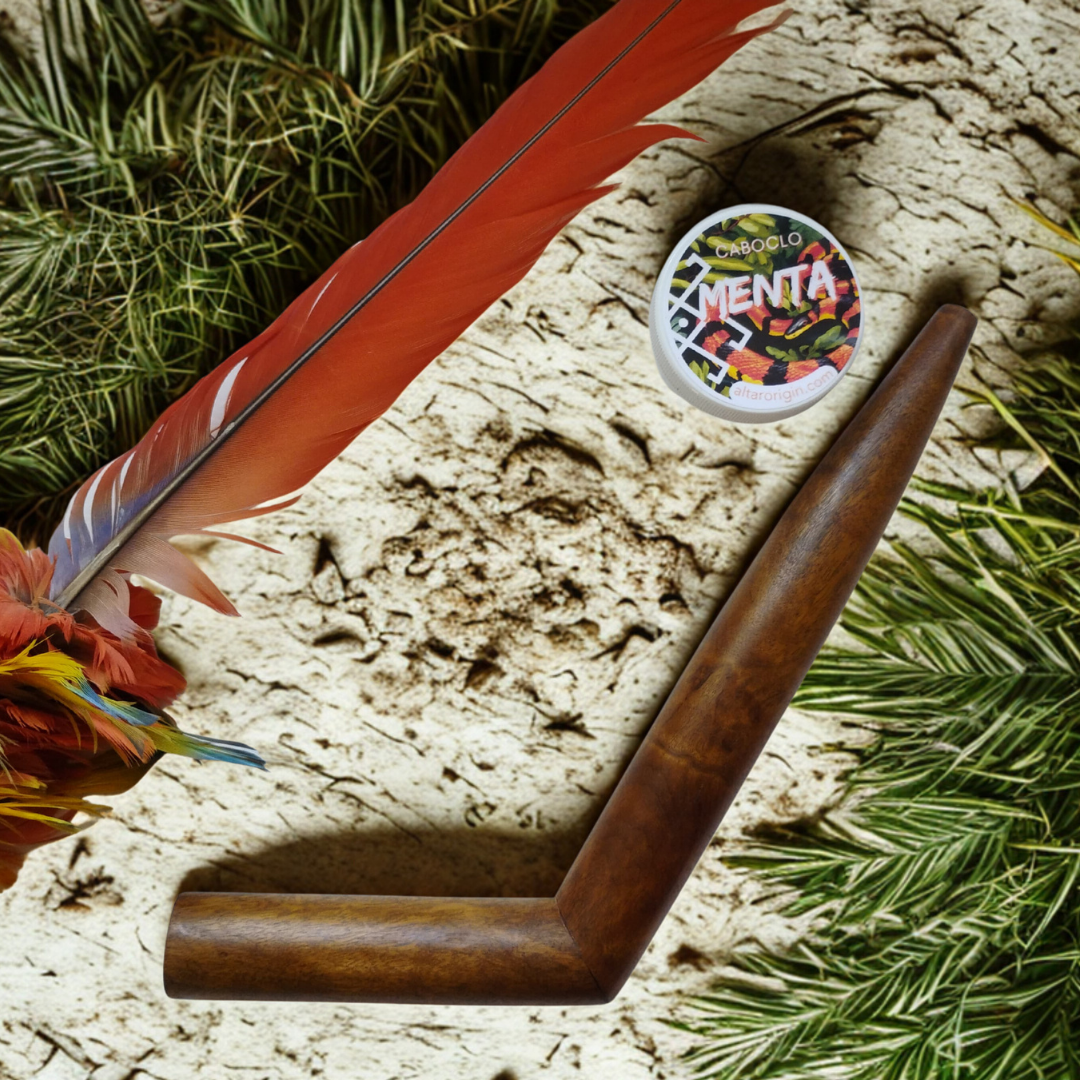
Cabreuva Wood Tepi “Share Applicators”

Cabreuva Wood Tepi “Share Applicators”

Regular price $79.00 CAD
Regular price $99.00 CAD Sale price $79.00 CAD
Sale Sold out
Shipping calculated at checkout.

Hand-turned from dense Cabreuva wood (Myrocarpus fastigiatus), this sharing tepi is built for ceremony. Cabreuva is a slow-growing hardwood of the Brazilian and Argentine Atlantic Forest — reddish-brown, with a fine grain that takes a smooth finish without chemical treatment. It has a faint natural scent, slightly warm and woody, that many practitioners find pleasant during ceremony.

The tepi is the partner applicator for hapé — the instrument through which one person administers the medicine to another. It is longer and straighter than a kuripe, allowing a steady, committed breath from a comfortable position. The act of giving hapé through a tepi is itself ceremonial: it asks the holder to be grounded, focused, and fully present for the person receiving.

How to Use a Tepi

  1. Receiver sits comfortably, eyes closed, with a set intention
  2. Load a measured amount of hapé into the nostril cup at the receiving end
  3. Seal the cup firmly against the receiver's right nostril
  4. On a shared signal, blow a single steady breath through the full length of the pipe
  5. Pause, then repeat on the left nostril
  6. Both sit quietly for 5–10 minutes

Care

Wipe clean after each use. Rub with coconut or jojoba oil monthly to maintain the wood. The natural colour will deepen with use and handling — this is normal and desirable.

Details

  • Material: Cabreuva hardwood (Myrocarpus fastigiatus)
  • Finish: Natural, unvarnished
  • Handmade — slight variations in colour and grain between pieces
  • Origin: South American Atlantic Forest region

Browse all applicators or shop hapé blends.

Quantity
View full details

About this blend

The Story Behind “Vine of the Shaman”

Veia de Pajé carries a story within the Kuntanawá tradition. The vine’s heart-shaped leaf gives rise to another name associated with this blend: “heart of the boa,” or jiboinha.

In the account shared with this Hapé, Kuntanawá elders emphasize approaching it with a clear intention. This cultural context helps explain the significance of “Vine of the Shaman” a name connected to the plant’s symbolism and the tradition surrounding its preparation.

Explore the Kuntanawá Collection

Veia de Pajé or Yawanawá Tsunu?

Both blends include Tsunu ash, but they come from different Indigenous traditions. Kuntanawá Veia de Pajé also incorporates the vine that gives “Vine of the Shaman” its name. Yawanawá Tsunu is described as a blend of Tsunu ash and mapacho.

The distinction is in their ingredients and cultural background, rather than a simple stronger-versus-gentler comparison. Explore Yawanawá Tsunu if you are looking for a Tsunu-and-mapacho blend; consider Veia de Pajé if you are specifically seeking the Kuntanawá preparation incorporating this vine.

Explore Yawanawá Tsunu
Why buy fromAltar Origin?

We are dedicated to offering ethically sourced, fair-trade, and traditionally crafted products that honor Indigenous wisdom and ancestral practices.

  • Directly Sourced from Indigenous Communities — We work closely with Indigenous artisans, harvesters, and medicine keepers, ensuring fair trade and supporting traditional ways of life.
  • Wild-Harvested & Pure — Sustainable harvesting methods that protect ecosystems and future generations.
  • Ceremonial Grade & Authentic — Only the highest-quality, traditionally prepared products.
  • Supporting Ancestral Traditions — A portion of every purchase contributes to Indigenous communities.
  • Mindful & Intentional — Conscious commerce that nourishes mind, body, and spirit.

When you choose Altar Origin, you're not just buying a product — you're participating in a movement of reciprocity, respect, and connection to the earth.

Before you choose

Questions we hear often

Can I buy a small package before choosing a larger size?

Yes. This listing offers a 3.5 g package, alongside 7 g, 21 g, 35 g and 50 g options. The smallest package lets you purchase less of this particular blend.

Why do two Hapé products share the Tsunu name?

Tsunu refers to the ash ingredient named in these blends. A shared ingredient name does not establish an identical recipe or preparation. Compare the maker, listed ingredients and confirmed product characteristics.

Do larger quantities offer better value?

Yes. Larger packages offer a lower price per gram compared with smaller sizes. Our Hapé sample sets also offer discounted pricing, making them a good option for exploring several blends. Compare the available sizes and sample sets to find the best value for your purchase.

Does the package include an applicator?

This product includes the Hapé only. Kuripe and Tepi applicators are sold separately. If you need an applicator, browse our collection or explore a Hapé starter kit that includes one. Check the kit description for its exact contents.

Can the colour or texture vary between batches?

Yes. Colour, texture and taste can vary slightly between batches. Seasonal conditions in the Amazon basin influence the natural ingredients used in preparation, so materials gathered during the dry season can differ from those gathered during the rainy season.