Skip to product information
1 of 3

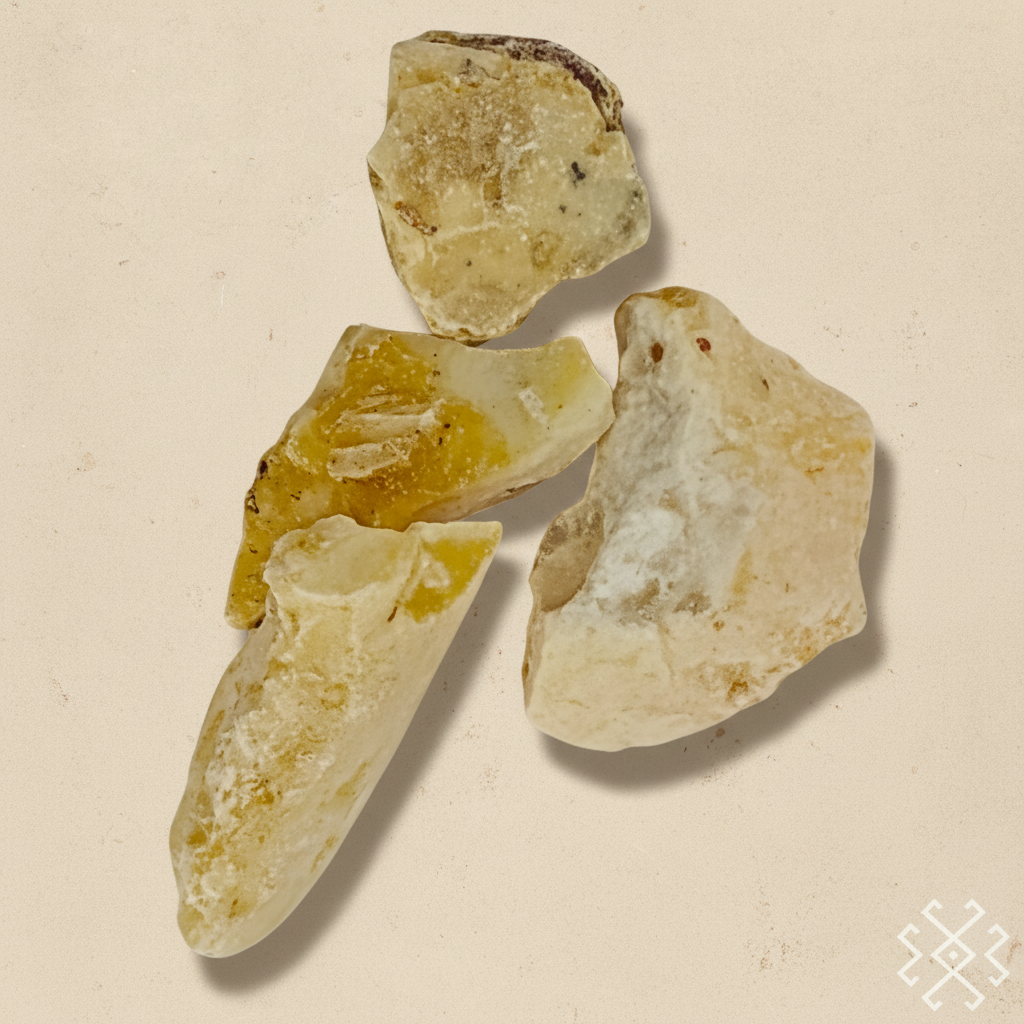
Copal Blanco | Mexico

Copal Blanco | Mexico

Regular price $18.00 CAD
Regular price Sale price $18.00 CAD
Sale Sold out
Shipping calculated at checkout.

White Copal (Bursera jorullensis) is one of Mesoamerica's most important ceremonial resins — the smoke offering that Aztec and Maya priests carried to their temples for millennia, and that still forms the backbone of curanderismo practice and Day of the Dead ceremony across Mexico and Central America. Where frankincense belongs to the Middle East, white copal belongs to the Americas.

Our white copal is raw, unrefined resin — translucent white-amber chunks harvested directly from wild Bursera trees in Mexico. When burned on a charcoal tablet, it produces a clean, bright white smoke and a fresh, slightly citrus-pine aroma that is distinct from the heavier, darker scents of black or gold copal. White copal is considered the purest variety, traditionally reserved for sacred ceremony and communication with ancestors and spirit.

How to Use White Copal

  • On charcoal tablets: Light a self-igniting charcoal tablet, wait 30 seconds until glowing, then place 1–2 small pieces of copal on top. The resin will melt and release smoke immediately.
  • Smudging spaces: Carry the smoking censer through each room, paying attention to corners and thresholds. Fan the smoke with your hand or a feather.
  • Altar work: Burn throughout ceremony, ritual, or meditation. Copal smoke is understood as both offering and purifier across many traditions.
  • Direct flame (traditional): Hold a small piece near an open flame until it begins to melt and smoke, then blow out the flame. Used in informal practice.

Details

  • Type: White copal resin (raw chunks)
  • Origin: Mexico
  • Scent: Fresh, clean, citrus-pine with a light sweetness
  • Pairs well with: Charcoal tablets, a clay or brass censer, or a simple abalone shell

We also carry frankincense, dragon's blood, and palo santo for a complete sacred smoke collection.

Size
Quantity
View full details

About this blend

The Story Behind “Vine of the Shaman”

Veia de Pajé carries a story within the Kuntanawá tradition. The vine’s heart-shaped leaf gives rise to another name associated with this blend: “heart of the boa,” or jiboinha.

In the account shared with this Hapé, Kuntanawá elders emphasize approaching it with a clear intention. This cultural context helps explain the significance of “Vine of the Shaman” a name connected to the plant’s symbolism and the tradition surrounding its preparation.

Explore the Kuntanawá Collection

Veia de Pajé or Yawanawá Tsunu?

Both blends include Tsunu ash, but they come from different Indigenous traditions. Kuntanawá Veia de Pajé also incorporates the vine that gives “Vine of the Shaman” its name. Yawanawá Tsunu is described as a blend of Tsunu ash and mapacho.

The distinction is in their ingredients and cultural background, rather than a simple stronger-versus-gentler comparison. Explore Yawanawá Tsunu if you are looking for a Tsunu-and-mapacho blend; consider Veia de Pajé if you are specifically seeking the Kuntanawá preparation incorporating this vine.

Explore Yawanawá Tsunu
Why buy fromAltar Origin?

We are dedicated to offering ethically sourced, fair-trade, and traditionally crafted products that honor Indigenous wisdom and ancestral practices.

  • Directly Sourced from Indigenous Communities — We work closely with Indigenous artisans, harvesters, and medicine keepers, ensuring fair trade and supporting traditional ways of life.
  • Wild-Harvested & Pure — Sustainable harvesting methods that protect ecosystems and future generations.
  • Ceremonial Grade & Authentic — Only the highest-quality, traditionally prepared products.
  • Supporting Ancestral Traditions — A portion of every purchase contributes to Indigenous communities.
  • Mindful & Intentional — Conscious commerce that nourishes mind, body, and spirit.

When you choose Altar Origin, you're not just buying a product — you're participating in a movement of reciprocity, respect, and connection to the earth.

Before you choose

Questions we hear often

Can I buy a small package before choosing a larger size?

Yes. This listing offers a 3.5 g package, alongside 7 g, 21 g, 35 g and 50 g options. The smallest package lets you purchase less of this particular blend.

Why do two Hapé products share the Tsunu name?

Tsunu refers to the ash ingredient named in these blends. A shared ingredient name does not establish an identical recipe or preparation. Compare the maker, listed ingredients and confirmed product characteristics.

Do larger quantities offer better value?

Yes. Larger packages offer a lower price per gram compared with smaller sizes. Our Hapé sample sets also offer discounted pricing, making them a good option for exploring several blends. Compare the available sizes and sample sets to find the best value for your purchase.

Does the package include an applicator?

This product includes the Hapé only. Kuripe and Tepi applicators are sold separately. If you need an applicator, browse our collection or explore a Hapé starter kit that includes one. Check the kit description for its exact contents.

Can the colour or texture vary between batches?

Yes. Colour, texture and taste can vary slightly between batches. Seasonal conditions in the Amazon basin influence the natural ingredients used in preparation, so materials gathered during the dry season can differ from those gathered during the rainy season.